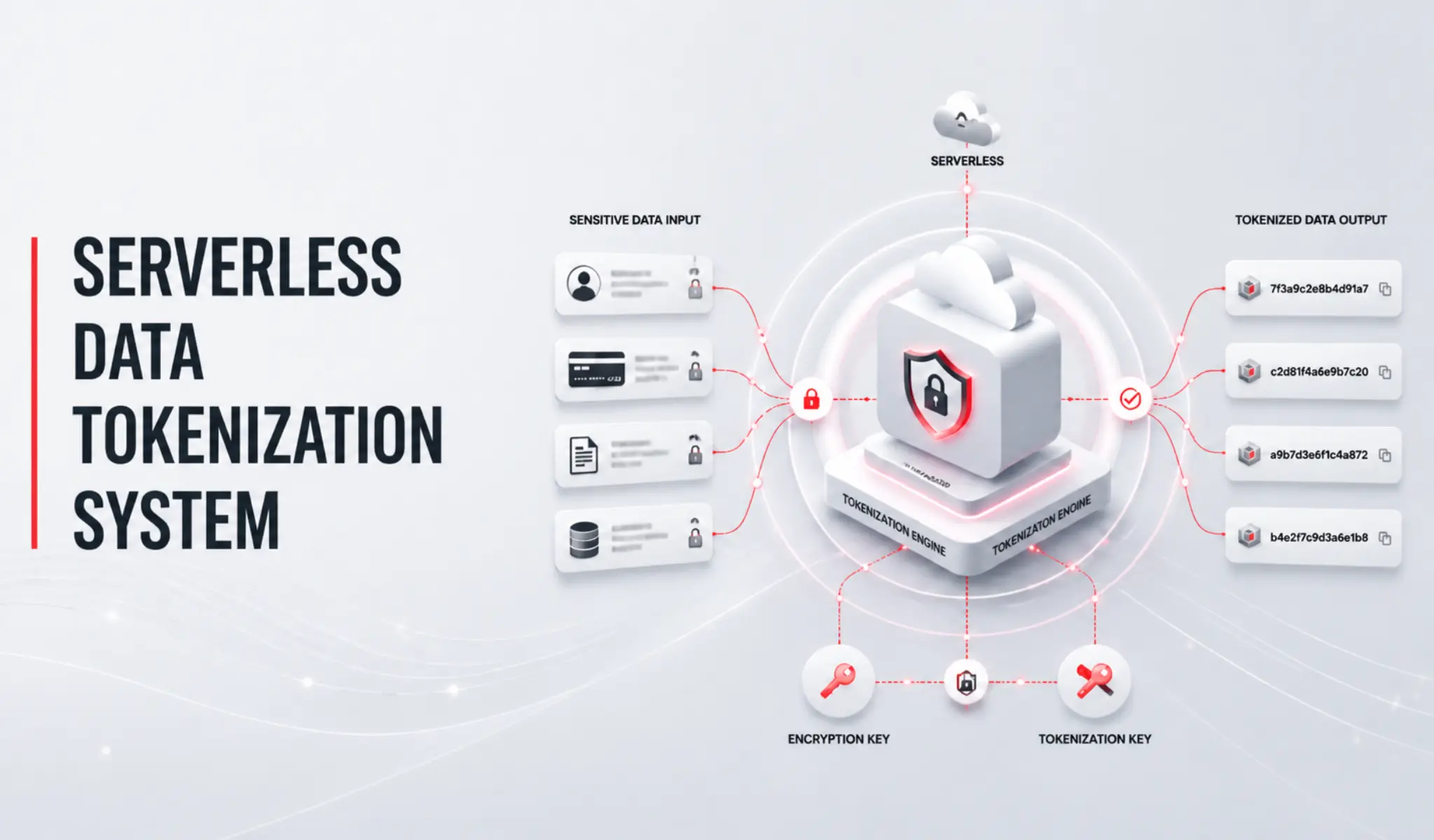
Safeguarding Data at Scale: Architecting a Serverless 'Dual-Key' Tokenization System
Zero-plaintext tokenization on AWS with dual-key encryption for maximum data security
Executive Summary
With increasing data privacy regulations and evolving cyber threats, protecting sensitive information - from PII to financial records - is a top priority.
Our production-grade Serverless Tokenization System on AWS implements a Zero-Plaintext environment, ensuring that sensitive data is never exposed over the network or stored in its raw form. By decoupling transport encryption from storage encryption, we achieve defense-in-depth while maintaining developer velocity.
The Architecture: Three-Tier Isolation
To maximize security and maintainability, the system is structured into three logical layers:
- Consumer SDK: A TypeScript library that abstracts complex cryptography, enabling internal teams to integrate security features with minimal code
- Core Tokenization Service: A hardened, serverless backend managing token lifecycle, cryptographic handshakes, and persistent storage
- Integration Layer: Event-driven patterns that notify downstream services of token expiration or deletion in real time
Core Security: The "Dual-Key" Strategy
Traditional encryption often relies on a single key for both transit and rest. Our system implements a multi-layer cryptographic design:
1. Transport Encryption (The Handshake)
- Sensitive data is encrypted client-side using a Transport KMS Key
- Payloads remain opaque during transit and in the Lambda environment until authorized
2. Internal Storage Encryption (The Vault)
- Core Service decrypts with the Transport Key and immediately re-encrypts with a separate Storage KMS Key before persisting
- Limits the "blast radius" of key compromise - stored data remains unreadable
The Tokenization Lifecycle
Tokens are treated as living entities with strict workflow control.
Token Creation: Encrypting at the Source
- Client-Side Shielding: SDK encrypts data locally
- Secure Handoff: Encrypted payload sent via secure path
- Persistence: Data stored in DynamoDB with TTL
Detokenization: Lazy Decryption Pattern
- Tokens are returned as Proxy Objects
- Decryption occurs only when
.decrypt()is explicitly called - Context Binding ensures each decryption is tied to a specific Lambda ARN and Nonce, mitigating replay attacks
High-Security Features
- Single-Use Tokens: Burn-on-read support for ephemeral sensitive data
- Event-Driven Observability: DynamoDB Streams + SNS broadcast token lifecycle events
- Infrastructure as Code (IaC): Full stack deployed serverlessly, version-controlled, and auditable
Business Benefits
- Zero-Plaintext Footprint: Data exists in memory for milliseconds during re-encryption
- Developer Velocity: SDK abstracts KMS & IAM complexity, enabling security in a few lines of code
- Regulatory Alignment: Simplifies compliance for GDPR, CCPA, and PCI-DSS
Conclusion
Tokenization is more than replacing data with references; it’s about creating an ecosystem of cryptographic trust.
By decoupling transport and storage layers, this serverless architecture provides robust defense-in-depth, securing enterprise data while maintaining high developer productivity.
Ready to Transform Your Business?
Let's discuss how our AI and software solutions can drive your success.