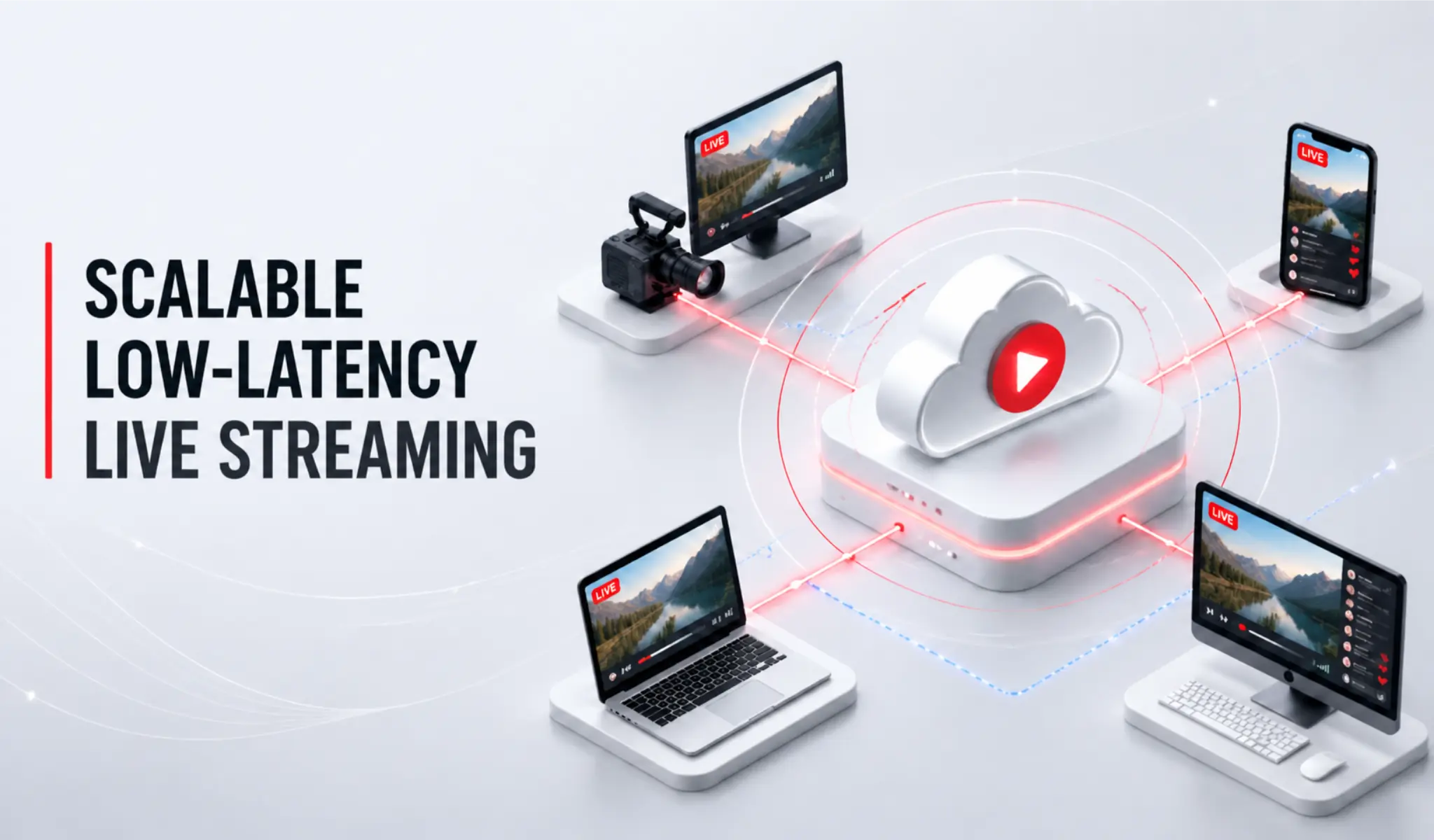
Scalable Low-Latency Live Streaming with Amazon IVS
Near real-time interactive streaming (2–5s) using Amazon IVS and a serverless control plane
Executive Summary
This case study explores the implementation of a robust, low-latency live video streaming architecture using Amazon Interactive Video Service (IVS). By leveraging a full-stack TypeScript environment, the solution bridges professional broadcasting tools with modern web playback.
The resulting system consistently delivers 2–5 seconds of glass-to-glass latency while maintaining a clean separation between the control plane (application logic) and the data plane (video ingestion and delivery).
The Challenge
Modern live streaming applications demand near real-time interaction between broadcasters and viewers. Building such systems introduces several complex challenges:
High Latency
Traditional streaming pipelines often struggle to achieve the sub-5-second latency required for interactive experiences such as live events, Q&A sessions, and auctions.
Complex Infrastructure
Manually managing:
- Video ingestion
- Transcoding pipelines
- Global content delivery
is resource-intensive and difficult to scale reliably.
Security Risks
Stream keys must be protected while ensuring playback is accessible only to authorized viewers - requiring a secure, well-designed backend.
The Solution: Managed Streaming with Amazon IVS
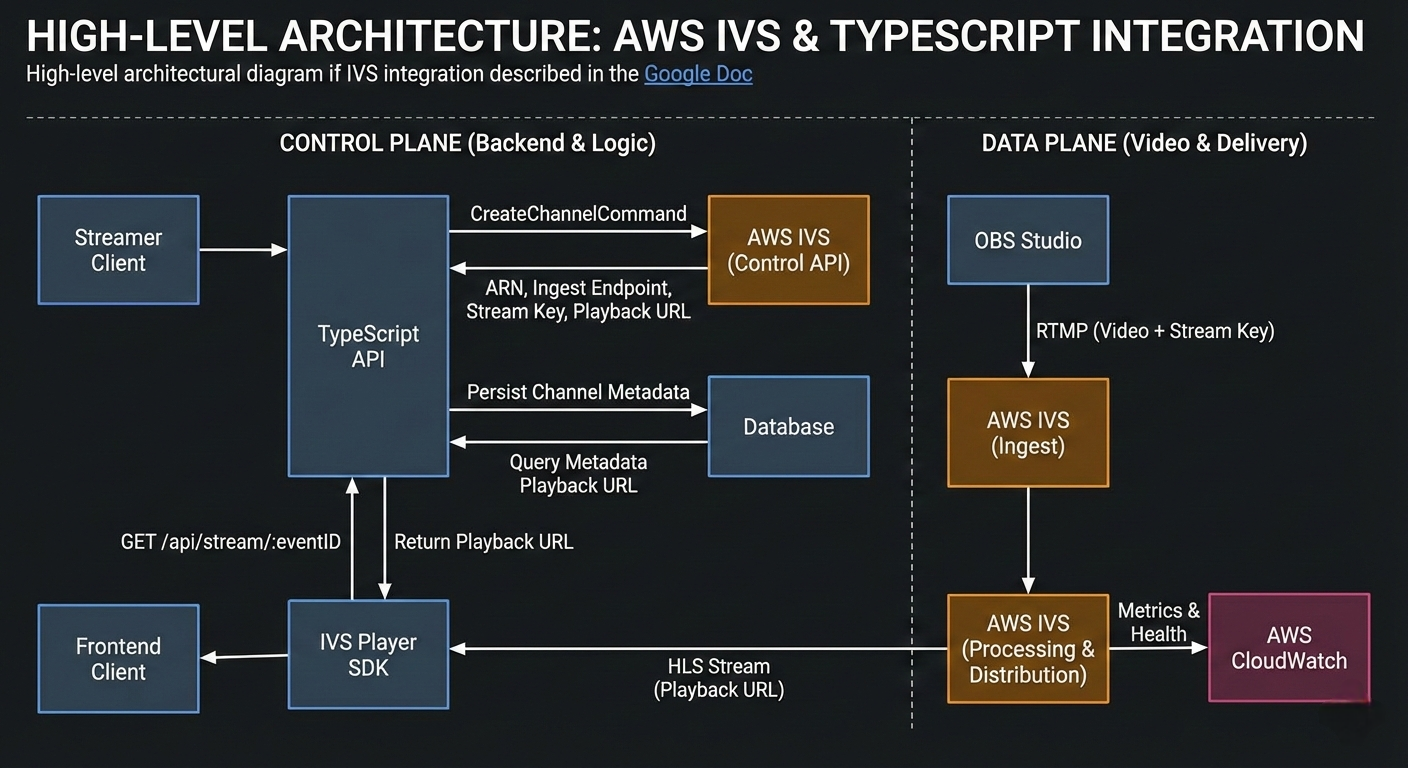
The solution leverages Amazon IVS as a fully managed service for video logistics, paired with a custom TypeScript backend to handle business logic and security.
Core Components
- Infrastructure: Amazon IVS (Standard Channel type, Low-Latency mode)
- Backend: Node.js API written in TypeScript for channel lifecycle management
- Frontend: React application using the Amazon IVS Player SDK
- Broadcasting: OBS Studio streaming via RTMP
This approach offloads operational complexity to AWS while preserving full control over application behavior.
Implementation Strategy
System Architecture
The system was designed with a strict separation of responsibilities:
- Control Plane (Backend): Manages channel creation, configuration, and metadata persistence, and acts as the single source of truth
- Data Plane (Amazon IVS): Handles video ingestion, transcoding, and global low-latency delivery
This separation improves reliability, scalability, and security.
The Streamer Flow (Backend)
When a streamer initiates a session, the backend performs a secure setup:
- Channel Creation: The backend issues a
CreateChannelCommandto Amazon IVS. - Persistence: Critical details such as Channel ARN, ingest endpoint, and playback URL are stored securely in the database.
Stream keys are never exposed to the frontend.
The Viewer Flow (Frontend)
The viewer experience emphasizes speed, simplicity, and resilience:
- The frontend requests stream details via a secure endpoint (
GET /api/stream/:eventId). - The backend retrieves the
playbackUrlfrom the database. - The Amazon IVS Player SDK handles HLS playback with automatic stream recovery and optimized low-latency playback.
Key Results
The final architecture delivered strong results across performance, security, and operations.
Outcomes
- Low Latency: Consistent 2–5 seconds of glass-to-glass latency, enabling real-time audience interaction
- Enhanced Security: Stream credentials are fully managed by the backend, minimizing exposure
- Scalability: Amazon IVS automatically handles global distribution, allowing the application to scale without manual intervention
- Observability: Integration with Amazon CloudWatch provides visibility into viewer counts, stream health, and operational metrics
Conclusion
This implementation demonstrates that a TypeScript-based full-stack architecture, combined with Amazon IVS, provides a powerful foundation for production-grade live streaming.
By offloading infrastructure complexity to AWS while retaining control over application logic and user experience, the solution effectively resolves the classic build vs. buy dilemma - delivering performance, scalability, and security without compromise.
Ready to Transform Your Business?
Let's discuss how our AI and software solutions can drive your success.