Beyond the Plate: How an Integrated Management System Future-Proofs Your Restaurant
Cloud-native restaurant management that unifies POS, operations, and guest experience
Introduction
The restaurant industry has moved beyond simple cash registers. Today, success is defined by how well a business can synchronize the kitchen, floor staff, and digital presence.
A modern Restaurant Management System (RMS) is no longer just a payment tool - it acts as the central nervous system of a hospitality business, integrating operations from the guest experience to inventory management.
The Hidden Costs of Fragmented Operations
Many restaurants still operate with technology silos: separate apps for delivery, POS, and manual spreadsheets for inventory. This fragmentation causes:
- Communication Gaps: Delays between front-of-house and kitchen staff
- Inventory Leakage: Stockouts and waste due to lack of real-time tracking
- Data Blind Spots: Difficulty consolidating sales across multiple channels or branches
Without a unified platform, operational inefficiencies impact profitability and guest satisfaction.
The Three Pillars of a Modern RMS
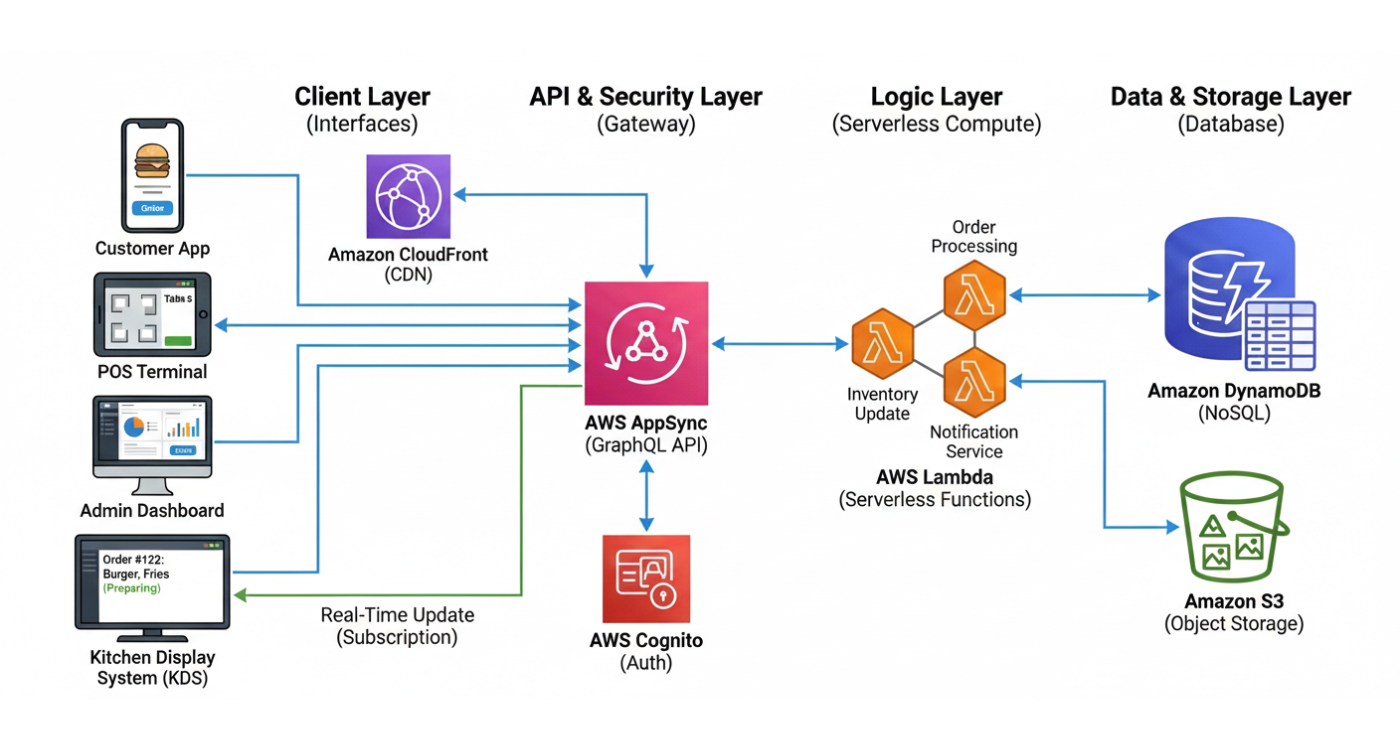
A truly comprehensive RMS bridges the gap between customers, staff, and management through three core components.
1. Digital Guest Experience (Customer Application)
Modern diners expect autonomy and seamless digital experiences:
- Contactless Ordering: QR-code-based menus for direct, customizable ordering
- Omnichannel Flexibility: Switch between dine-in, takeaway, and delivery effortlessly
- Real-Time Transparency: Track order status live, reducing wait-time anxiety
2. The Command Center (Administrative Panel)
Management benefits from a 360° operational view:
- Dynamic Menu Control: Update prices or mark items out-of-stock across branches instantly
- Intelligent Inventory: Track batches, expiration dates, and receive low-stock alerts proactively
- Staff Governance: Role-based access ensures sensitive information is only visible to authorized personnel
3. Front-of-House Engine (Point of Sale)
The POS is the heartbeat of daily operations:
- Visual Table Management: Live floor plan showing occupied, available, and cleaning-required tables
- Kitchen Display System (KDS) Integration: Orders routed instantly to the correct station (grill, salad, etc.)
- Payment Versatility: Supports split bills, bank transfers, and digital wallets
The Power of Cloud-Native Architecture
A cloud-native RMS built on robust platforms like AWS provides three critical advantages:
- Real-Time Synchronization: Customer orders instantly update the kitchen and inventory
- Zero Downtime: Serverless architecture keeps systems running even during peak periods
- Infinite Scalability: System grows from one location to fifty+ without costly on-site hardware
Turning Data into Decisions
A modern RMS enables actionable intelligence:
- Popularity vs. Profit: Identify “stars” (high-profit, high-demand) vs. “dogs” (low-profit, low-demand)
- Waste Reduction: Track spoilage trends via batch-level data
- Staff Efficiency: Monitor prep times and identify kitchen bottlenecks
Conclusion: Investing in the Future
A Restaurant Management System is more than software - it is a strategic investment.
By unifying customer-facing apps with backend logistics, restaurants can focus on creating memorable culinary experiences while maintaining operational efficiency.
Whether managing a single cafe or a multi-location chain, the right RMS provides a digital foundation that ensures your business stays ahead as the industry evolves.
Ready to Transform Your Business?
Let's discuss how our AI and software solutions can drive your success.