Deep Dive into QData: Mastering End-to-End Homogeneous and Heterogeneous Database Migration
In today’s digital age, data generation is accelerating at an unprecedented pace. Remarkably, 90% of the world's data has been produced in just the last two years. As organizations struggle to keep pace with this data deluge, the need for efficient data management and migration solutions has never been more pressing.

Written by hasintha
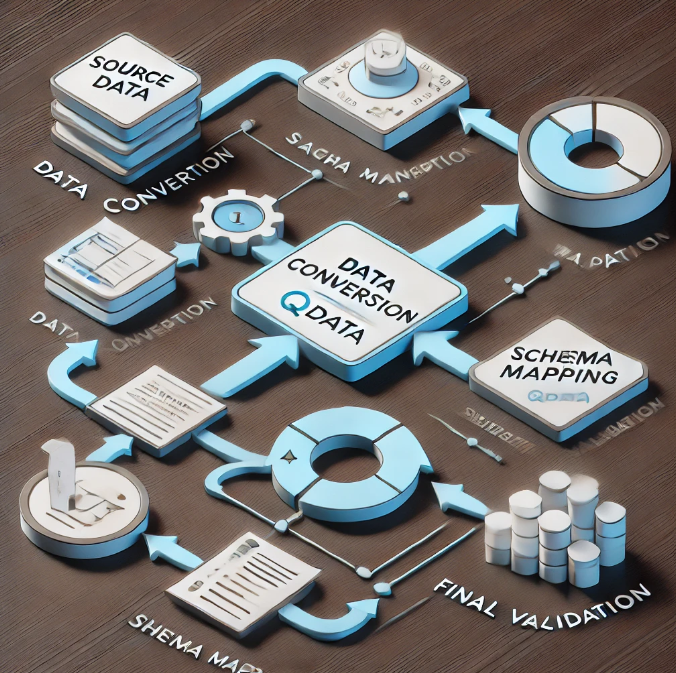
Deep Dive into QData: Mastering End-to-End Homogeneous and Heterogeneous Database Migration (TEST)IntroductionIn today’s digital age, data generation is accelerating at an unprecedented pace. Remarkably, 90% of the world's data has been produced in just the last two years. As organizations struggle to keep pace with this data deluge, the need for efficient data management and migration solutions has never been more pressing.OverviewData management is changing fast. It now requires easy database migrations to keep running. Moving between similar or different systems can be tough. This is especially true as companies adopt new technologies. Here comes QData. It's a groundbreaking platform that makes migrations easier. QData solves complex problems, ensuring smooth transfers between similar and different systems. By improving the process, it helps businesses adapt quickly, stay on track, and be more efficient in today's fast-moving digital world.PurposeQData revolutionizes database migrations, effortlessly handling both homogeneous and heterogeneous transfers. Its broad compatibility and AWS integration showcase its versatility. Organizations adopting QData best practices optimize migrations, minimizing downtime while preserving data integrity. This powerful tool excels in cloud transitions, vendor changes, and data center consolidations.Consider a multinational corporation shifting from Oracle to MongoDB. The challenge lies in transforming relational data into NoSQL format. Tables become flexible JSON documents. Fixed schemas evolve into schema-less structures. SQL queries transform into new syntaxes and operations.QData simplifies complex data migration. It converts tables to documents, maps relational data to NoSQL, and rewrites queries. This ensures smooth transitions between different database types.With QData's features, organizations easily handle various migrations. This includes upgrading systems or merging different ones. QData ensures continuity and consistency in data.QData automates many migration steps. It converts data, maps schemas, and ensures smooth transitions with minimal disruption. Its algorithms analyze source data, find the best representation, and make necessary changes. Thus, it guarantees a seamless migration while keeping data integrity and usability.QData's advanced toolkit goes beyond basic migration. It transforms, validates, and audits data, ensuring accuracy across systems. This precision is vital for sensitive information transfers.The platform modifies data formats, converts values, and reorganizes datasets for target systems. It also includes strong validation tools to ensure data integrity and prevent operational errors.Comprehensive auditing features track all migration activities, providing transparency and accountability. Organizations can review the process, spot issues, and confirm complete data transfer. These capabilities make QData essential for maintaining consistency in complex migrations.JSON Code:Here is a JSON example. It shows how to use QData to map a SQL database table to a NoSQL database. It demonstrates a transformation of data structures.{ "rules": [ { "rule-type": "selection", "rule-id": "1", "rule-name": "1", "object-locator": { "schema-name": "qrio_db", "table-name": "Patient" }, "rule-action": "include" }, { "rule-type": "object-mapping", "rule-id": "2", "rule-name": "TransformToDDB", "rule-action": "map-record-to-record", "object-locator": { "schema-name": "qrio_db", "table-name": "Patient" }, "target-table-name": "qrio-dynamodb", "mapping-parameters": { "partition-key-name": "PatientID", "short_key": "PatientName", "exclude-columns": [ "patient_id", "last_name", "first_name", "address", "city" ], "attribute-mappings": [ { "target-attribute-name": "PatientName", "attribute-type": "scalar", "attribute-sub-type": "string", "value": "${first_name} ${last_name}" }, { "target-attribute-name": "PatientID", "attribute-type": "scalar", "attribute-sub-type": "string", "value": "${patient_id}" }, { "target-attribute-name": "Address", "attribute-type": "scalar", "attribute-sub-type": "string", "value": "${address} , ${city}" } ] } } ] }This JSON code shows how QData maps a SQL table, like Patient in qrio_db, to a NoSQL table, such as qrio-dynamodb. It defines how SQL columns turn into NoSQL attributes. This example highlights QData's ability to manage complex mappings and data changes automatically.Table 01: A comparison chart illustrating the differences between relational and NoSQL databases.FeatureRelational Databases (SQL)NoSQL DatabasesData ModelStructured, table-based with predefined schemas (rows and columns).Flexible schema (document, key-value, graph, or wide-column).SchemaFixed schema; changes require migrations.Dynamic schema; can be easily altered without migrations.ScalabilityVertically scalable (scale-up).Horizontally scalable (scale-out).Data IntegrityStrong ACID (Atomicity, Consistency, Isolation, Durability) compliance.May offer BASE (Basically Available, Soft state, Eventual consistency); some NoSQL databases also support ACID.Query LanguageSQL (Structured Query Language) with standardized queries.Varies (e.g., MongoDB uses MQL, Cassandra uses CQL); often lacks a standard query language.Use CasesSuitable for complex queries, transactions, and applications requiring strong data integrity.Ideal for handling large volumes of unstructured or semi-structured data, real-time analytics, and distributed systems.PerformanceOptimal for complex joins, data aggregation, and transactions.Typically faster for simple, high-volume operations and handling unstructured data.ExamplesMySQL, PostgreSQL, Oracle, SQL Server.MongoDB, Cassandra, Redis, DynamoDB, Neo4j.RelationshipsWell-suited for complex relationships between entities (joins).Often uses embedded or denormalized data; relationships are managed differently (e.g., graph databases).ConsistencyStrong consistency model (due to ACID).Eventual consistency is common, but some support strong consistency.Image 01: A flowchart showing the migration process facilitated by QData, from data conversion to schema mapping and final validation.Key Features and Supported PlatformsQData excels at tackling complex database migrations, offering unmatched versatility across diverse systems. As companies juggle multiple data platforms, this tool's flexibility proves invaluable. It seamlessly handles both relational and NoSQL databases, adapting to varied business needs.Consider a firm using MySQL for transactions and MongoDB for flexible, unstructured data.QData seamlessly connects diverse systems, crucial for streamlining operations and boosting scalability. Its broad database support empowers businesses to evolve data strategies, ensuring smooth transitions between platforms without disruption. In today's data-driven world, QData's comprehensive approach is indispensable for migrations.Data migration challenges vary with database diversity. Moving data between similar SQL systems is easier. However, transferring data across different platforms is more complex. It requires managing different structures and languages. Conventional tools often fall short in these cases. So, choosing the right tool is crucial. This ensures smooth transitions between different databases.Switching from SQL Server to Cassandra? It's more than just data transfer. You're reshaping information to fit a new mold. Old tools often demand hands-on tweaking, risking mistakes and lost data. Enter QData. This automation wizard handles transformations, schema shifts, and checks with ease. It slashes migration time, boosts precision, and keeps your data pristine. No more manual juggling or integrity worries. QData streamlines the leap from relational to NoSQL, making complex transitions feel effortless.**Key Features:** QData's features meet diverse migration needs. They make it a strong solution for any organization facing the complexities of database migration. Some of the key features include:Support for Diverse Databases:Relational Databases: QData is compatible with MySQL, Oracle, SQL Server, and PostgreSQL. This lets users easily switch between relational databases or to non-relational ones. NoSQL Databases: It also supports MongoDB, Cassandra, Couchbase, and DynamoDB. This allows for easy transitions in scalable, flexible environments.Scalability:From small databases to sprawling enterprise systems, QData adapts seamlessly. It handles complex structures and massive volumes with equal finesse. Efficient and dependable, this platform excels at migrations of any scale. For organizations grappling with intricate data landscapes, QData offers a robust solution. Its versatility shines. It works for both small datasets and large transfers across different systems.Data Integrity and Consistency:QData ensures data stays intact during moves. Its tools check each piece against the new system's needs. This care cuts the risk of loss, damage, or errors that could harm business. So, QData keeps operations running smoothly and data accurate.Automated Schema Mapping and Data Transformation:From source to target, QData streamlines database migrations. Its intelligent mapping aligns schemas automatically, reformatting data to fit new environments. This automation minimizes manual work, cuts errors, and accelerates the entire process. QData handles complex tasks. It ensures smooth, efficient data transitions with little human oversight.Minimal Downtime:QData's swift migration slashes downtime, keeping businesses humming. No revenue loss. No productivity dip. Its streamlined processes move data fast and flawlessly, shrinking transition time. Organizations stay on track, barely noticing the shift. QData makes migration seamless. It lets companies focus on their core operations.Best Practices and Future DevelopmentsDatabase migration success hinges on more than QData-like tools. It demands meticulous planning and execution, especially for large or critical systems. Start with a thorough assessment of source and target environments. Understand data structures, identify incompatibilities, and analyze requirements. Consider differences like Oracle to MongoDB transitions carefully.Develop a clear strategy outlining steps, roles, and timelines. Anticipate challenges such as format discrepancies, schema issues, and volume concerns. Create contingency plans to tackle these potential roadblocks. Rigorous testing and strategic execution are crucial for a seamless transition.Test migrations simulate the process, exposing potential issues before they impact live systems. This proactive approach reduces the risks of data loss and downtime. It validates data transformation, ensuring accurate mapping to new structures.Careful execution is crucial. Schedule migrations during off-peak hours to minimize disruption. Monitor continuously to address issues promptly. A rollback plan is essential for unforeseen problems, allowing reversion to the previous state if needed.Pre-migration tests ensure data accuracy, especially when changing databases. They also check the functionality and accessibility of migrated information. Careful planning and testing reduce risks. However, being ready for surprises is crucial for successful migration.Future Developments: QData will evolve alongside the database landscape. It aims to support new NoSQL and distributed SQL databases. Also, it plans to improve data transformation. This will make migration easier by automating complex tasks.Furthermore, QData expects deeper ties with cloud platforms like AWS, Google Cloud, and Azure. This will help organizations use cloud tools better during migrations. As more companies move to the cloud, these seamless solutions will be crucial.QrioMatrix CTO Kokila Gunawardana praises QData's revolutionary impact. The software streamlined their database migration, minimizing downtime while boosting data integrity. This endorsement underscores QData's power to transform data transitions. Organizations can now manage migrations without issues. This maximizes efficiency and minimizes disruptions to their operations.Links for Further Reading:Database Migration Best PracticesEmerging Trends in Database TechnologiesCloud Integration Strategies for Database MigrationsConclusionSummaryQData excels in managing diverse database migrations. It supports numerous systems, simplifying modern data management complexities. The platform ensures precise, consistent, and secure transitions between similar or disparate databases. Its advanced features tackle core migration challenges, enabling smooth organizational transitions.Today, QData stands out in the fast-moving data world. It simplifies complex data moves and connects with cloud services. This makes it vital for modern companies. As businesses use more data types, QData ensures smooth management and transitions.Upgrade your data migration with QData. See its benefits at QrioMatrix.com. For custom solutions, get in touch. Experience QData and lead in the data-driven era.Additional ElementsFAQs:What types of databases does QData support? From Oracle to MongoDB, QData backs diverse databases. It covers traditional systems and NoSQL options alike. Relational stalwarts MySQL and SQL Server find equal footing with Cassandra's modern approach. Even data warehouses get their due - Amazon Redshift and Snowflake included. This versatility makes QData a go-to for migrating data across varied landscapes, meeting a spectrum of needs with ease.Data integrity reigns supreme in QData's migration toolkit. Robust error handling tackles issues head-on, while smart rollback procedures stand ready as a safety net. Meticulous validation checks act as vigilant guardians, ensuring every byte transfers flawlessly. This three-pronged approach is an impenetrable shield. It protects your data's accuracy and completeness during its journey.Resources:Delve into our comprehensive guide on database migration tactics. Learn proven strategies. Avoid common mistakes. Use tools like QData for smooth transitions. Optimize your data management with expert insights on best practices.Chamal Jayasinghe, a data science aficionado, champions technological solutions for enhanced data handling. His passion lies in refining migration processes and bolstering organizational capabilities. Explore Chamal's perspectives on LinkedIn: Chamal Jayasinghe.Keywords:To optimize your blog for search engines, use these keywords naturally.Database migration: Highlight the process and challenges of migrating databases.QData: Emphasize how QData facilitates and improves the migration process.Homogeneous heterogeneous databases: Discuss QData's ability to handle both types of database migrations.AWS integration: QData integrates with AWS and other clouds for better data management.Meta Description"Unlock the full potential of QData for seamless database migrations. Learn about its key features, best practices, and AWS integration."